1. Overview of Portable Gasoline Generators
Portable gasoline generators are widely used as mobile standby power solutions for outdoor operations, camping, emergency power supply and vehicle supporting scenarios. The product lineup covers a complete range of specifications with diverse structures and performance grades. Classified by engine type, they include two-stroke and four-stroke models. Classified by power rating, the series ranges from 0.6kW mini handheld units, 1–6kW frame-type portable generators, to advanced silent inverter generators and dedicated 24V parking generators.
Different portable generator models feature distinct overall weight, external structure, mounting support points and assembly processes. The classic 950 two-stroke mini generator is lightweight and designed without outer protective frame. Mainstream four-stroke portable generators adopt steel frame protection for onsite durability. Inverter portable generators are equipped with noise reduction housings and integrated inverter electronic control modules.
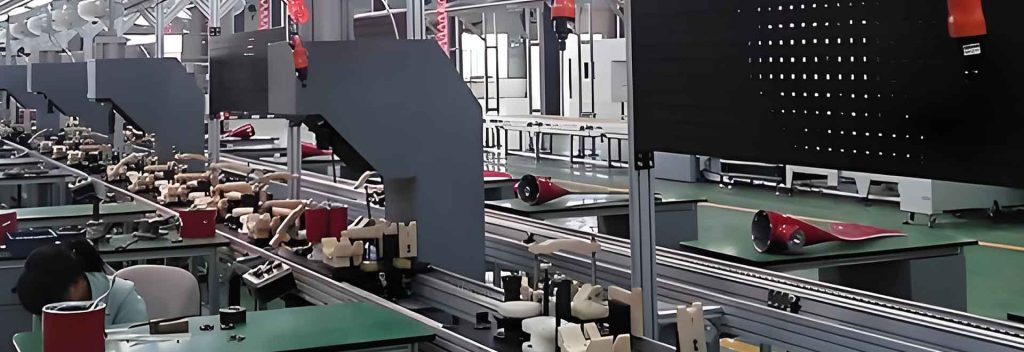
The complete manufacturing procedure includes pre-assembly, engine fitting, fuel tank and pipeline installation, fastener locking, wire harness connection, air tightness testing and power-on inspection. As a typical multi-station discrete assembly process, mass production fully relies on professional portable gasoline generator production line and standardized portable generator assembly pipeline to ensure stable cycle production and consistent product quality.
2. Applicable Scope of This Assembly Line
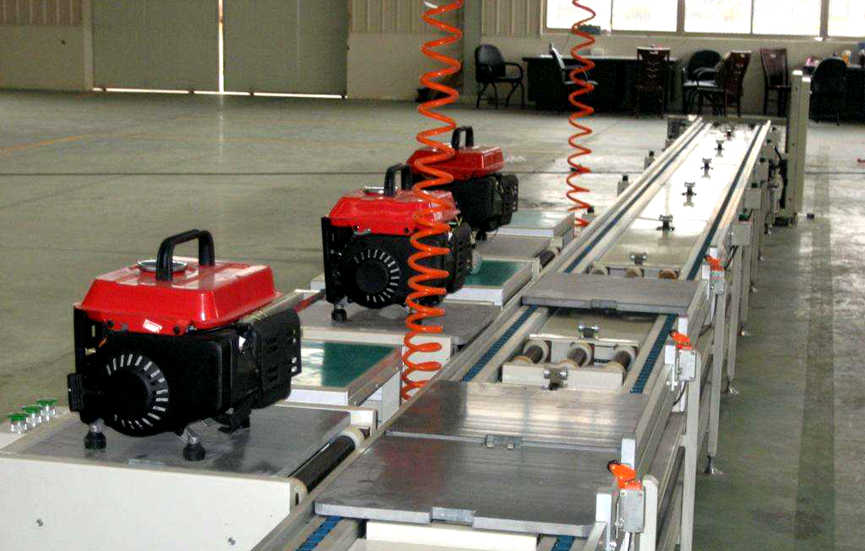
This speed chain assembly line is originally developed and customized for 950 series mini handheld portable gasoline generators, serving as a dedicated portable gasoline generator production line for small power portable generator mass manufacturing.
-
Workpiece Adaptation: Suitable for frameless mini portable generators, positioned and transported stably via bottom shock-absorbing foot pads on standard tooling plates.
-
Process Adaptation: Covers full working procedures including parts pre-assembly, screw fastening, pipeline installation, semi-finished product circulation and offline electrical testing.
-
Hardware Configuration: Equipped with pneumatic stopping and positioning systems, retractable air pipelines for each station, and customized positioning supports on tooling plates to effectively prevent shell and fuel tank scratches during circulation.
-
Production Mode: Adopts closed-loop circulating tooling plates with multi-station parallel operation and adjustable production rhythm, meeting standardized mass production requirements of mini portable generators.
Without hardware modification, thisportable generator assembly pipeline is only compatible with series models with similar overall dimensions and bottom supporting structures.
3. Key Notes for Switching to Different Portable Generator Models
To expand production capacity for frame-type gasoline generators, inverter generators and other upgraded models on the existing portable gasoline generator production line, direct mass switching is not feasible. The following technical adjustments are mandatory for flexible production expansion:
-
Tooling & Fixture Upgrade: Different generator models have unique gravity centers and bottom support points. Quick-change positioning fixtures are required to ensure stable workpiece positioning, avoid offset and tilting, and protect fuel tanks and outer shells from collision damage during pipeline circulation.
-
Station Spacing Calibration: Frame-type portable generators feature larger overall length and width. It is necessary to verify the speed chain pitch and adjust stopper positions to reserve sufficient safety clearance for workpiece transmission.
-
Process & Station Expansion: Inverter generators require additional procedures such as inverter module assembly and outer shell installation. High-power portable generators involve more spare parts, which demands increased station quantity and expanded power supply and testing interfaces for complete process coverage.
-
Load Capacity Verification: Frame-type generator units are much heavier than traditional 950 mini models. Recheck the load-bearing capacity of speed chains and tooling plates to prevent overload operation and mechanical failure of the portable generator assembly pipeline.
-
Safety Layout Optimization: For production lines equipped with full-machine test stations, exhaust gas discharge systems and safety protection devices must be configured to meet workshop environmental and operational safety standards.
In summary, this professional assembly line supports flexible multi-model production, but cross-series production iteration must be matched with targeted upgrades of tooling, load structure and station layout.
4. Core Technical Parameters for Customized Portable Generator Assembly Line
The following standardized parameters are applicable for project quotation, technical proposal confirmation and equipment customization of portable gasoline generator production line and portable generator assembly pipeline:
-
Transmission Type: Standard 2.5-speed speed chain conveying, stable and low-noise operation
-
Line Length: Single effective station length: 1200–1800mm; total line length customized according to workshop layout and station quantity
-
Tooling Plate Size: Conventional 800×600mm / 1000×700mm; plywood / steel plate surface with customized product positioning tooling
-
Tooling Plate Load Capacity: Basic model ≥150kg; upgraded model for high-power frame generators ≥250kg
-
Conveying Speed: 0.5–12m/min frequency conversion adjustable; optimal assembly working speed: 2–4m/min
-
Driving System: Motor + reducer frequency conversion drive, equipped with pneumatic stoppers for accurate station positioning and automatic stop
-
Frame Structure: Optional aluminum profile / carbon steel structure with height-adjustable foot cups
-
Station Supporting Facilities: Retractable air hoses, air distribution manifolds; optional socket power, working lights and signal indicators
-
Operation Mode: Automatic closed-loop upper and lower layer circulation, supporting manual / automatic switching
-
Working Environment: Standard factory workshop; test station area requires matched exhaust gas treatment system
-
Expandable Functions: Quick-change fixture system, lifting transfer mechanism, NG offline sorting station, MES data acquisition interface